


Nobel Prize in Physiology or Medicine, 2014
Prof. Edvard I. Moser
Norwegian University of Science and Technology, Norway
As you move, the brain keeps track of where you are.
The brain's GPS: How we know where we are
· Academia Sinica
The guide video for this lecture is in production.
Moser and his colleagues discovered grid cells, which lay a regular coordinate mesh inside the brain so that position is tracked continuously during movement. It is how the brain maps space, and the scaffold that memory hangs on.
Full lecture
Interview
Two versions, side by side
Each laureate spoke twice: the formal lecture in Stockholm in the year of the award, and this one in Taiwan. Years apart, before a different audience, the account is not always the same. The pair repays watching together.
The Taiwan lecture
27 March 2026
Academia Sinica
Further up this page, ready to play.
The original Nobel Lecture
2014
Stockholm
The formal lecture from the prize year, on nobelprize.org, with video and transcript.
- One body of research; what each talk chose to include.
- From peers in Stockholm to students in Taiwan: how the telling changes.
- What has been revised between the prize year and now.
My notes
Learning area →A private notebook for this lecture. Everything you write stays in your own browser and is saved as you type. The fields follow the three stages set out in the learning area: write the question you want to ask before it (prepare), set down the argument once you have heard it (attend), then your own response and a further question (reflect).
This browser will not let the site keep anything, so what you write disappears when you leave the page. The usual causes are a private window or a setting that blocks site data. Copy anything you need first.
-
1Prepare
Before the lecture: settle on this one, watch the guide and the original Nobel Lecture, and write the question you want to ask.
Look up whatever you do not know — the official citation on nobelprize.org, the laureate’s own institution, Wikipedia. An hour of background changes what the same fifty minutes is worth.
A question for the speaker These three are the judging criteria of the Into the Nobel question competition.- Depth: it reaches the trade-offs and limits behind the work.
- Logic: the question stands up, and its premise holds.
- Originality: the answer cannot simply be looked up.
-
2Attend
While you listen or watch: note that you have seen the Taiwan lecture, and set down the argument in your own words.
The speaker’s core argument What the lecture argues — in your own words. -
3Reflect
Afterwards: your own response, and what you would still ask.
Your reflection What surprised you, what you disagree with, how it differs from the original Nobel Lecture.An extension question (at least one) Something the speaker would want to answer, and that cannot be looked up.
What you write stays in this browser and is never uploaded. It disappears if you switch machines or clear site data, so keep a copy of anything you need.
Notes are to be written by the student; how each field is written (typed, pasted or inserted automatically) is recorded alongside it and goes into the file exported from the learning area.
Watch next
-
 Has a guide video 4 Nobel Prize in Physiology or Medicine, 2013 Prof. Thomas C. Südhof Nerve cells pass a signal with a millisecond to spare.
-
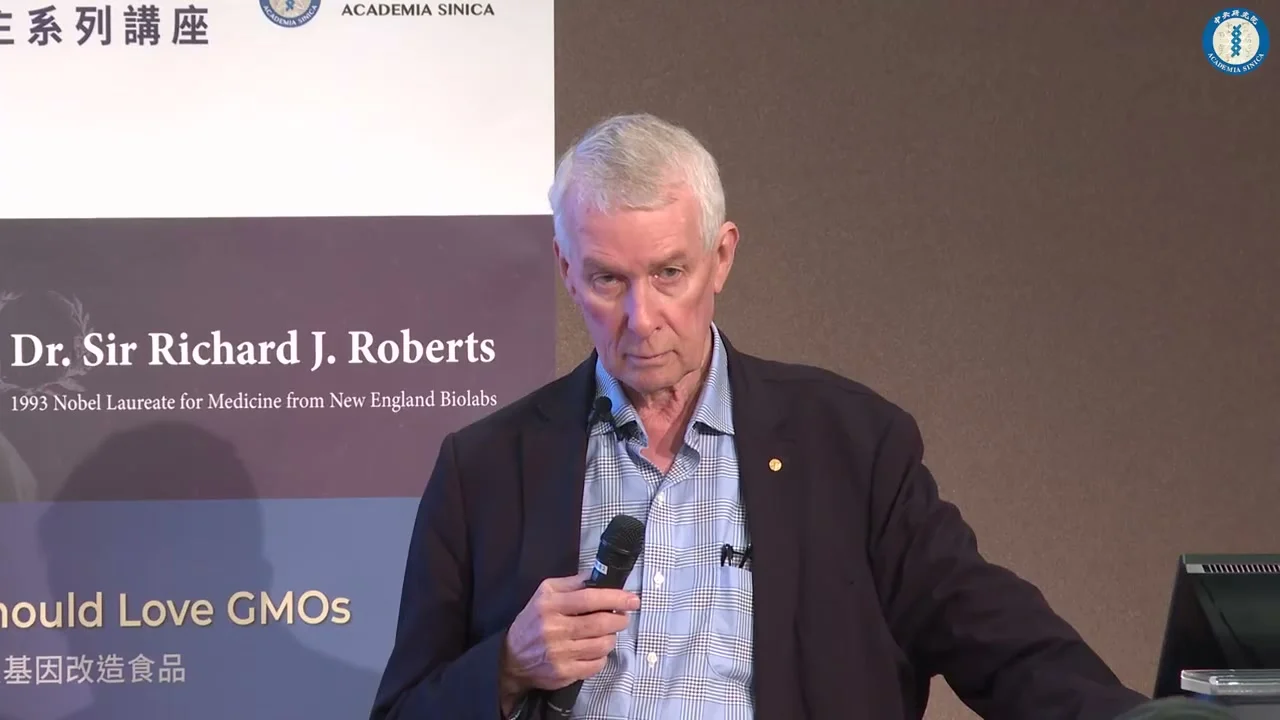 Has a guide video 4 Nobel Prize in Physiology or Medicine, 1993 Dr. Sir Richard J. Roberts A gene is not one continuous piece of text.
-
 Has a guide video 2 Nobel Prize in Physiology or Medicine, 2014 Prof. May-Britt Moser A set of cells lays a coordinate grid over space.